Applications

PVC Pipes for Electrical Conduit in Saudi Arabia

4B Factory Technical Team Reviewed by an Electrical Infrastructure Engineer Updated 2026 9 min read

PVC electrical conduit is the rigid, non-metallic raceway used to protect and route power and telecom cables in Saudi projects. 4B Factory manufactures uPVC duct to SAS 254/255 (20–63 mm) and PVC conduit to NEMA TC 2 (½″–6″) in Al-Kharj, for underground duct banks, building wiring, and direct-burial cable protection across the Kingdom.

Behind every powered building, street light, substation, and fibre network is a hidden layer of cable-protection pipe. Electrical conduit and duct shield power and communication cables from moisture, impact, corrosion, and ground movement, and they organise cable routes so networks can be maintained and upgraded without excavation. In Saudi Arabia's saline soil and high ambient temperatures, non-metallic PVC and uPVC conduit is the material of choice because it does not corrode and installs fast. This guide explains how PVC conduit and duct are selected, classed, and specified for Saudi electrical and telecom projects, and how 4B Factory supplies them factory-direct from Al-Kharj.

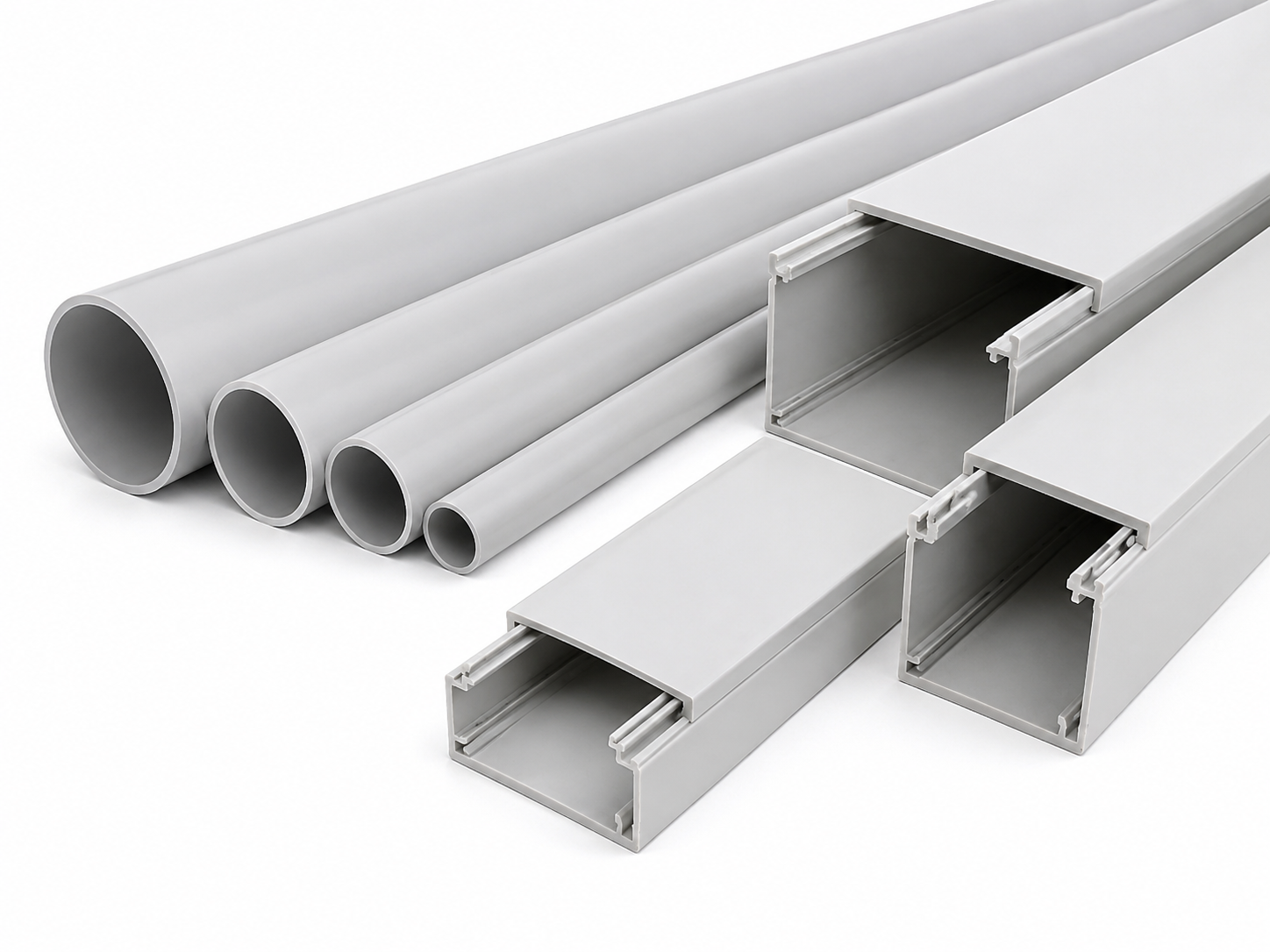
Stacks of PVC electrical conduit and uPVC duct pipes for underground cable protection on a Saudi construction site

Conduit vs Duct: What's the Difference?

The terms are used loosely on site, but the distinction is practical. Conduit is the smaller-bore rigid raceway that protects and routes electrical wiring — run through buildings, along walls, in slabs, or in shorter underground stretches. Duct is the larger, heavier-wall pipe laid underground, usually in banks (duct banks), to carry power feeders and telecom cabling between points, and is built for direct burial. Most projects need both: conduit for the building and distribution wiring, duct for the underground power and telecom routes.

Quick answer for electrical contractors: For building and distribution wiring, use PVC conduit to NEMA TC 2 (EPC 80-PVC). For underground power and telecom cable protection and duct banks, use uPVC duct to SAS 254/255, direct-buried. Match the bore to the cable fill (keep to about 40% fill for heat dissipation) and step up wall thickness where the run is exposed to physical damage.

Why PVC & uPVC for Electrical Conduit

Rigid non-metallic conduit has largely replaced galvanised steel for underground and general cable protection in the region, and for good reasons:

  • Corrosion resistance — unlike steel (EMT/GRC), PVC does not rust or pit in saline ground, humid coastal air, or moist duct banks, so it needs no cathodic protection or coating.
  • Electrical insulation — PVC is a dielectric (non-conductive) raceway, adding a layer of safety around live conductors.
  • Smooth bore, low friction — eases cable pulling and reduces jacket abrasion on long runs.
  • Light weight & fast install — solvent-weld jointing and low weight cut labour versus threaded steel conduit.
  • Direct-burial rated — suitable for underground duct banks, with or without concrete encasement.
  • Cost-effective — lower material and installation cost than metallic conduit for most power and telecom routes.
PVC conduit and uPVC duct pipes laid in a cable trench for underground power and telecom installation on a Saudi infrastructure project

Standards & Sizes: SAS 254/255 and NEMA TC 2

4B Factory manufactures two complementary cable-protection lines: uPVC duct to the Saudi Standard SAS 254/255 for underground work, and PVC conduit to NEMA TC 2 (EPC 80-PVC) for electrical raceway. The table below is the specification set an electrical or infrastructure engineer works from.

SpecificationDetail
uPVC DuctSAS 254/255 · 20–63 mm · underground power & telecom, direct burial
PVC ConduitNEMA TC 2 (EPC 80-PVC) · ½″–6″ · electrical raceway
MaterialRigid PVC / unplasticised PVC (dielectric, non-metallic)
Joint typeSolvent-weld socket & spigot; couplers, bends & sweeps
InstallBuilding raceway, slab, wall, direct-burial, concrete-encased duct bank
ApplicationPower cable protection, telecom & fibre ducting, street lighting, substations

Standards compliance is mandatory on Saudi electrical and infrastructure projects: conduit and duct are governed by the Saudi Standards, Metrology and Quality Organization (SASO), which sets and enforces the technical regulations for products used in the Kingdom. Products register through SASO's conformity route and are evidenced with a certificate of conformity. You can review the regulator's official remit on saso.gov.sa. Always confirm the standard your consultant specifies (SAS 254/255 for duct, NEMA TC 2 for conduit) and request the matching certificate of conformity from the manufacturer.

How to Size & Specify Conduit for Cable Protection

Three factors drive a conduit or duct specification: bore (driven by cable count and diameter), wall thickness / rating (driven by burial and exposure), and route (building raceway vs underground duct bank). As a practical guide:

  • Building & distribution wiring: PVC conduit to NEMA TC 2, sized so cables occupy roughly 40% of the internal cross-section to allow heat dissipation and pulling clearance.
  • Underground power feeders: uPVC duct to SAS 254/255, direct-buried, with sand bedding and rock-free backfill to protect the pipe wall.
  • Telecom & fibre routes: uPVC duct, often in multi-way duct banks with spacers, sized for future cable capacity.
  • Exposed / physical-damage runs: step up to heavier-wall conduit where the raceway is above ground or at risk of impact.
  • Bends & direction changes: use factory sweeps and bends rather than tight site bends, which restrict cable pulling.
Rule of thumb: most underground conduit failures happen after the pipe is joined and backfilled, not before. Specify sand bedding, keep backfill free of sharp rock, and use the correct solvent-weld procedure at every joint — the pipe is only as reliable as its weakest coupling.

Fittings, Bends & Duct-Bank Accessories

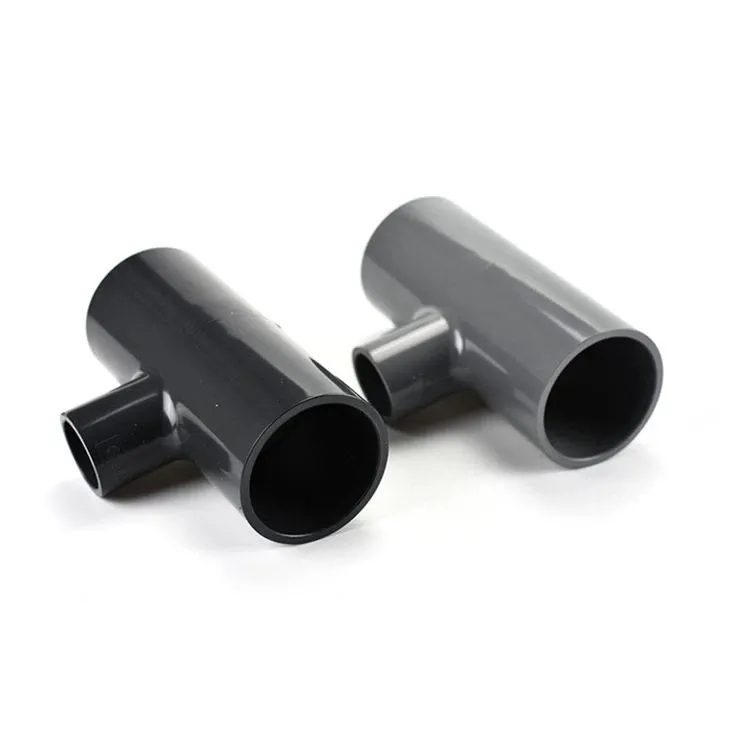
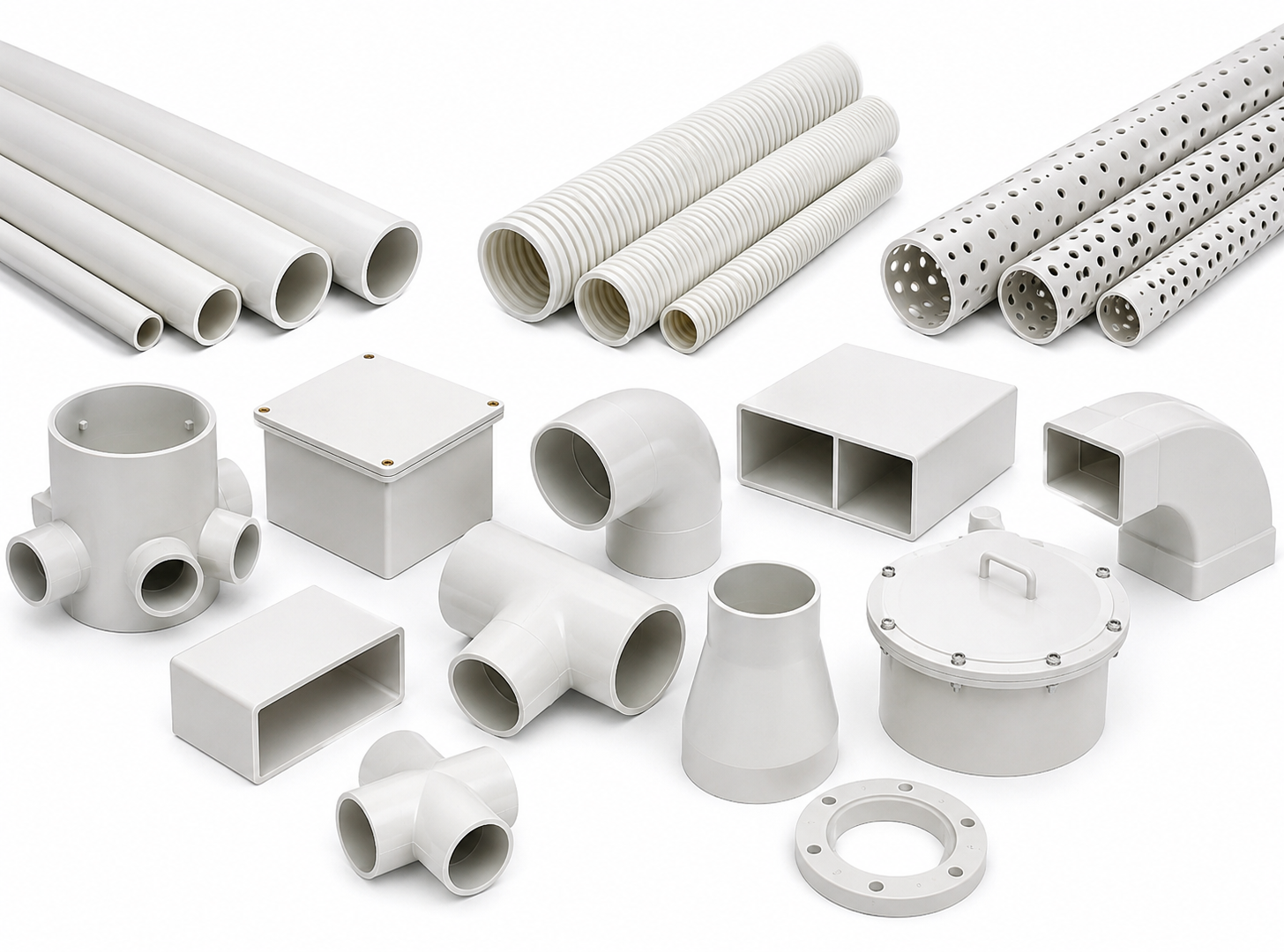
A conduit run is a system, not just pipe. Every direction change, junction, and duct-bank formation needs matching components: couplers, long-radius sweeps and bends, adaptors, end bells, and spacers that hold multi-way duct banks in formation for concrete encasement. 4B Factory supplies matching PVC conduit and uPVC duct fittings, plus fabricated bends and specials made to the project's exact geometry, so the raceway system is complete and code-compliant end to end rather than assembled from mismatched stock parts.

Electrical & Telecom Conduit Applications Across Saudi Arabia

PVC conduit and uPVC duct from 4B Factory serve the full range of Saudi electrical and communications projects, delivered factory-direct from the Al-Kharj plant:

  • Building electrical installations — concealed and surface conduit for power and lighting wiring.
  • Underground power distribution — direct-burial and concrete-encased duct for feeders and substations.
  • Telecom & fibre-optic networks — duct banks for communications and fibre cabling.
  • Street lighting & road infrastructure — cable ducting along highways and urban roads.
  • Industrial & commercial facilities — cable management for plants, warehouses, and developments.

Delivery Across the Kingdom — Factory-Direct From Al-Kharj

4B Factory manufactures conduit and duct at its plant in Al-Kharj Industrial District 27 and delivers factory-direct to Riyadh and the central region, the Eastern Province (Dammam, Khobar, Dhahran, Jubail), and the Western region (Jeddah, Makkah, Madinah). Supply comes straight from the manufacturer with no distributor margin, so project pricing stays competitive and lead times stay short for bulk and project-scale orders. Standards documentation and certificates of conformity are supplied with every order for consultant and contractor approval.

Frequently Asked Questions

Conduit is the smaller-bore rigid raceway that protects and routes electrical wiring, often through buildings. Duct is the larger, direct-burial pipe that houses power and telecom cables underground, usually in duct banks. Most projects use both — conduit for building wiring, duct for underground routes.

4B Factory manufactures PVC conduit to NEMA TC 2 (EPC 80-PVC) and uPVC duct to Saudi Standard SAS 254/255. Both are used for electrical and telecom cable protection across the Kingdom, and are supplied with a certificate of conformity for project approval.

Yes. uPVC duct to SAS 254/255 is designed for direct burial, carrying underground power and telecom cabling. It should be laid on sand bedding with rock-free backfill, and can be concrete-encased in duct banks where extra mechanical protection is required.

Size the bore so cables occupy about 40% of the internal cross-section, which allows heat dissipation and pulling clearance. Conduit runs ½″–6″ and duct 20–63 mm; the exact size depends on the cable count, diameter, and future capacity.

For most underground and general routes, yes. PVC does not corrode in saline ground or humid coastal air, is a dielectric insulator, weighs less, and installs faster than steel conduit. Steel (EMT/GRC) is still used for specific exposed or high-impact locations where codes require it.

Yes. 4B Factory supplies uPVC duct to SAS 254/255 for power, telecom, and fibre-optic cable protection, including multi-way duct-bank formations, factory-direct from Al-Kharj with standards documentation for approval.

4B Factory manufactures PVC conduit and uPVC duct in Al-Kharj, about an hour from Riyadh, and delivers factory-direct across the Kingdom. Conduit is made to NEMA TC 2 and duct to SAS 254/255, with standards documentation supplied for project approval.

4B Factory Technical Team

PVC & uPVC Pipe Manufacturer — Al-Kharj, Saudi Arabia

Written by the technical team at 4B Factory (Four Brothers Industrial Co.), manufacturers of PVC conduit, uPVC duct, sewer, drainage, and pressure pipe in Al-Kharj Industrial District 27, supplying electrical, telecom, and infrastructure projects across Saudi Arabia.

Specifying an Electrical or Telecom Project?

Send your conduit or duct standard, sizes, cable schedule, and quantities for a factory-direct quotation with standards documentation.