
uPVC vs HDPE vs Ductile Iron Pipe: An Honest Comparison
uPVC, HDPE and ductile iron each win in different conditions. uPVC suits gravity sewer and moderate-pressure water at the lowest cost; HDPE suits high-pressure, unstable-ground and fusion-welded runs; ductile iron suits very high pressure and heavy structural or trenchless duty. Matching the material to the application matters more than any single "best pipe."
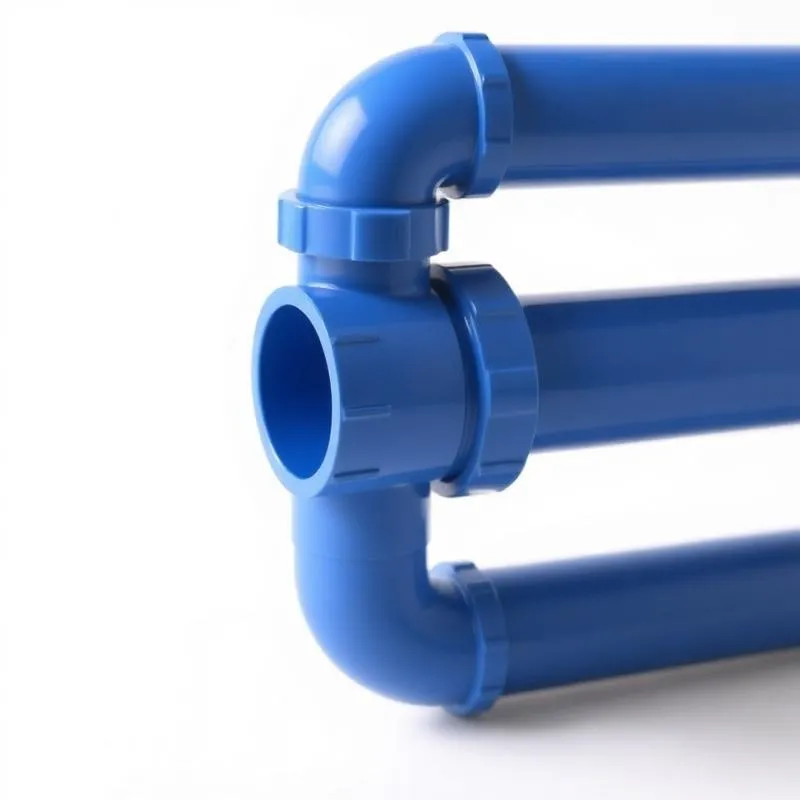
Ask "which is the best pipe material?" and the honest answer is: it depends on what the line has to do. uPVC, HDPE and ductile iron are the three materials that dominate Saudi water and drainage infrastructure, and each was engineered for a different job. Specifying the wrong one is expensive whichever way the mistake runs, so this guide compares them on the factors that actually decide a project, and says plainly where each material wins.
4B Factory manufactures uPVC pipe, so we have a stake in it. That is exactly why this comparison concedes where HDPE and ductile iron are the better choice. An engineer choosing a pipe material deserves the real trade-offs, not a sales pitch.
The Three Materials at a Glance
Before the detail, here is what each material is and where it sits in the market.
uPVC (unplasticised PVC) is rigid, corrosion-free plastic pipe. It is the workhorse of gravity sewer and moderate-pressure water networks: low cost, light to handle, immune to corrosion, and simple to joint with rubber-ring or solvent-cement connections. Its ceiling is pressure and ground movement.
HDPE (high-density polyethylene) is a flexible plastic pipe joined by heat fusion into a continuous, leak-free string. That flexibility and the welded joint make it the go-to for high-pressure mains, unstable or seismic ground, and trenchless installation where the pipe is pulled through the earth.
Ductile iron is a metal pipe with very high pressure and structural capacity. It handles the highest pressures, the heaviest surface loads, and demanding trenchless work, at the cost of weight, price, and the corrosion protection metal pipe needs in aggressive ground.
Side-by-Side Comparison
The table below is the fast answer. Each row is a factor that commonly decides a specification.
| Factor | uPVC | HDPE | Ductile Iron |
|---|---|---|---|
| Pressure ceiling | Moderate (to ~16 Bar, Class 5) | High (fusion-welded mains) | Very high |
| Corrosion resistance | Excellent (non-metallic) | Excellent (non-metallic) | Needs coating/lining in aggressive soil |
| Ground movement | Rigid, less tolerant | Flexible, very tolerant | Rigid, joint-dependent |
| Jointing | Rubber-ring / solvent cement | Butt or electrofusion welding | Push-fit / flanged / restrained |
| Weight & handling | Light | Light | Heavy (plant needed) |
| Trenchless suitability | Limited | Excellent | Good (heavy-duty) |
| Relative cost | Lowest | Mid | Highest |
| Typical service life | 50+ years buried | 50+ years | Long, with corrosion protection |
| Best-fit duty | Gravity sewer, moderate-pressure water | High-pressure & unstable ground | Very high pressure & structural |
No column is best on every row, and that is the point. The right material is the one whose strengths line up with the demands of your specific line, pressure, ground, installation method and budget together.
Where uPVC Wins
uPVC is the correct default for the largest category of buried pipe in Saudi Arabia: gravity sewer and drainage, and moderate-pressure water distribution. On these duties nothing beats it on total cost.
Gravity sewer and drainage. These lines are not highly pressurised; they need a smooth bore, corrosion immunity and a reliable joint. uPVC to SAS 1395/1396 delivers all three at the lowest installed cost, which is why it dominates municipal drainage specifications. See our uPVC sewer pipes.
Moderate-pressure water. For potable and utility water up to Class 5 (16 Bar), uPVC pressure pipe carries the duty at a fraction of ductile iron's cost and weight. See our watermain pressure pipes.
Corrosion immunity. Saudi Arabia's saline soils and coastal humidity attack metal pipe. uPVC does not corrode, rust or scale, so it needs no cathodic protection or coating, unlike ductile iron in the same ground.
Cost and handling. uPVC is the cheapest of the three per metre and light enough to place without heavy plant, which lowers labour and equipment cost across a project.
Where uPVC Loses
Being straight about the limits is what makes the rest of this guide trustworthy. There are four conditions where uPVC is the wrong choice and another material should be specified.
1. Pressure above its class ceiling. When a main runs above roughly 16 Bar, uPVC is out of its range. This is HDPE or ductile iron territory. Do not push uPVC past its rated class to save cost.
2. Unstable or seismic ground. Rigid pipe and moving earth is a bad pairing. Where ground settles, shifts, or is seismically active, HDPE's flexibility and welded, leak-free joints handle the movement far better.
3. Trenchless installation. For horizontal directional drilling and pipe-bursting, the pipe is pulled through the ground and must take tensile load along a continuous string. HDPE's fused joints are built for this; uPVC's socketed joints are not.
4. The highest-pressure and heavy structural duty. Trunk mains at very high pressure, or pipe under heavy structural surface loading, are where ductile iron's metal strength is worth its weight and price.
If your line is high-pressure, in moving ground, installed trenchless, or under heavy structural load, look at HDPE or ductile iron first. For everything else, which is most buried water and sewer pipe, uPVC is usually the most economical correct answer.
Where HDPE Wins
HDPE's advantage is the fused joint and the material's flexibility. Butt-welding or electrofusion turns a run of pipe into one continuous, jointless string with no leak paths, which matters most in three situations: high-pressure mains where every joint is a risk, unstable or seismic ground where the pipe must flex without failing, and trenchless installation where the string is pulled through the earth under tension. Where any of these apply, HDPE is usually the right call over uPVC.
Where Ductile Iron Wins
Ductile iron is the heavyweight for the most demanding pressure and structural duties. It carries the highest pressures, tolerates heavy surface loading, and stands up to demanding trenchless work. The trade-offs are real: it is the heaviest to handle, the most expensive per metre, and it needs coating or lining to resist corrosion in aggressive Saudi soils, protection that the two plastic materials never require. For very high pressure trunk mains and heavy structural applications, though, its strength justifies the cost.
How to Choose: A Simple Decision Path
Work through these questions in order and the material usually selects itself.
| Question | If yes, lean toward |
|---|---|
| Is it gravity sewer or drainage? | uPVC |
| Is it moderate-pressure water (to ~16 Bar)? | uPVC |
| Is the pressure very high? | HDPE or ductile iron |
| Is the ground unstable or seismic? | HDPE |
| Is it a trenchless (HDD / pipe-burst) install? | HDPE (or heavy-duty ductile iron) |
| Is there heavy structural surface loading? | Ductile iron |
| Is corrosion resistance critical with no coating? | uPVC or HDPE |
| Is lowest installed cost the priority for a non-pressure line? | uPVC |
In practice most Saudi water and sewer networks blend materials: uPVC for the large volume of gravity drainage and moderate-pressure distribution, HDPE where pressure or ground conditions demand it, and ductile iron reserved for the highest-duty trunk sections. There is rarely one material across an entire scheme.
Not Sure Which Material Fits Your Line?
Send your application, pressure, ground conditions and installation method. 4B Factory will tell you honestly whether uPVC is the right fit, and specify it to standard if it is.
Request a Free QuoteFrequently Asked Questions
Neither is universally better. uPVC is more economical for gravity sewer and moderate-pressure water. HDPE is better for high-pressure mains, unstable or seismic ground, and trenchless installation because of its flexibility and fused, leak-free joints.
uPVC is cheaper, both per metre and to install, since it is lighter and needs no corrosion coating. Ductile iron costs more but carries much higher pressure and structural loads, which is where its cost is justified.
Choose HDPE over uPVC when the line is high-pressure, runs through unstable or seismic ground, or is installed trenchless. HDPE's heat-fused joints form a continuous leak-free string that handles these conditions better than uPVC's socketed joints.
Ductile iron can corrode in aggressive, saline Saudi soils and needs protective coating or lining. uPVC and HDPE are non-metallic and do not corrode, so they need no such protection in the same conditions.
All three offer long service life. uPVC and HDPE deliver 50+ years buried with no corrosion. Ductile iron lasts long too, but only with corrosion protection maintained in aggressive ground. Service life depends more on correct selection than on the material alone.
uPVC pressure pipe is rated to Class 5 (16 Bar), which covers most distribution duty. Above that ceiling, specify HDPE or ductile iron rather than pushing uPVC past its rated class.