
uPVC vs PPR, Copper, GI and PEX Pipes: How to Choose
Choose uPVC for cold water mains, sewers, drainage, duct and conduit. Choose PPR, PEX, copper or CPVC for hot water inside buildings. Galvanised iron rusts from the inside, so it is rarely the first choice for new potable lines. 4B Factory makes uPVC and CPVC, but not PPR, PEX, copper or GI.
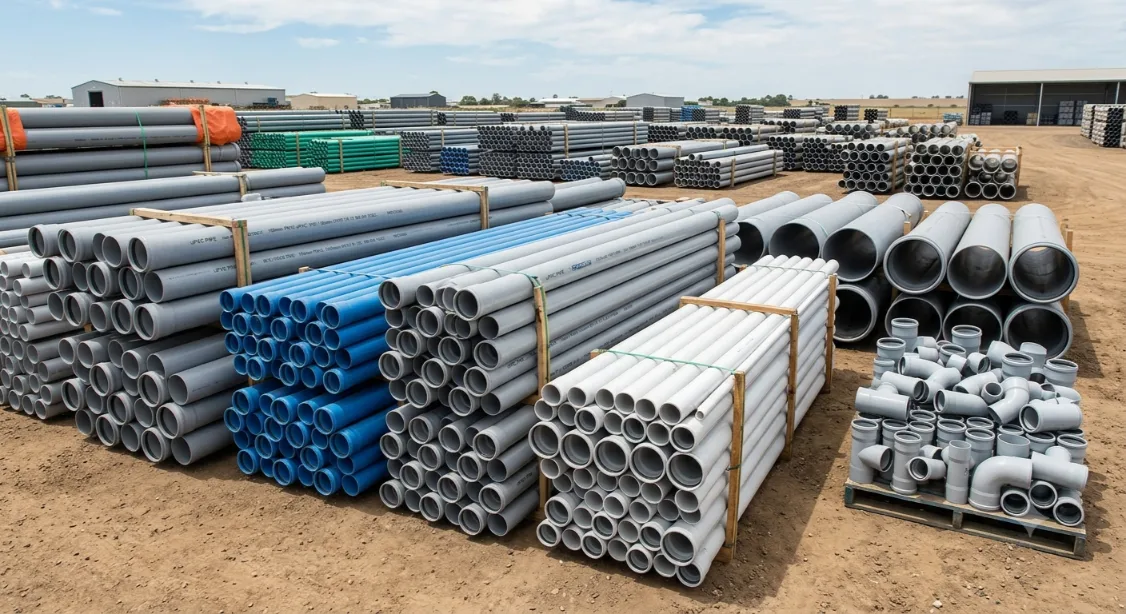
The right pipe for each job
The job decides the material. Find yours in the table before comparing prices.
| Job | Pick | Why |
|---|---|---|
| Buried cold water main | uPVC | Does not rust, resists scale and is joined with solvent cement. |
| Sewer and drainage | uPVC | Non-pressure flow at ambient temperature through a smooth, rigid bore. |
| Cable duct and conduit | uPVC | No hot fluid is involved, so heat rating adds nothing. |
| Hot water inside a building | PPR, PEX, copper or CPVC | uPVC is not rated above 60 °C. CPVC also works, and 4B Factory makes it; see the CPVC comparison below. |
| Retrofit with many bends | PEX | Supplied flexible, and fitted with crimp, expansion or compression fittings rather than solder or glue. |
| Exposed run in direct sun | Copper or steel, or painted uPVC | PEX degrades in sunlight and the PPR data sheet used here lists indoor applications. |
| Compressed air, fuel gas or steam | Not uPVC | Supplier guidance excludes PVC. Use pipe specified for that service. |
The CPVC option has its own page: CPVC vs uPVC vs PVC.
The materials side by side
| Material | Hot water | Joined by | Main weakness |
|---|---|---|---|
| uPVC | No, 60 °C maximum | Solvent cement | Heat and long sun exposure |
| PPR | Yes, up to 95 °C on one manufacturer’s data sheet | Socket heat fusion with a heated tool | Listed for indoor use; keep out of sunlight |
| PEX | Yes, hot and cold plumbing | Crimp, expansion or compression fittings | Degrades in sunlight |
| Copper | Yes | Solder, brazing, compression or press fittings | Pinhole failures in some conditions |
| Galvanised iron (GI) | Depends on the pipe and service | Threaded, grooved or flanged steel fittings | Rusts from the inside |
Sources: a PP-R manufacturer data sheet, Wikipedia on PEX, Wikipedia on copper tubing and Wikipedia on galvanisation. Temperature limits depend on product, standard and pressure, so confirm against the data sheet you buy.
uPVC vs PPR: Where uPVC is the right answer
Cold, buried and gravity-fed work is uPVC territory. The bore stays smooth because the material does not rust or scale up the way steel does, and joints are made with solvent cement and a clean square cut. Pressure duty is set by the pipe’s class, not by the polymer alone, which is why watermain pressure pipe, sewer pipe and duct pipe are separate products. If a line will carry anything warmer than ambient, read temperature derating first.
Where uPVC is the wrong answer
Hot water above 60 °C is the clearest case. Sunlight is the second: PVC embrittles under continuous direct sun unless it is painted, jacketed or UV-stabilised, so an exposed riser needs protection or a different material. Compressed air, fuel gas and steam are out of scope for PVC altogether. For aggressive chemicals, check the specific chemical and temperature before choosing any plastic.
What the alternatives do better, and what they cost you
PPR carries hot and cold water in buildings, and one manufacturer’s data sheet gives up to 95 °C. It is joined by socket heat fusion, so the fitter needs a heating tool and training, and the same data sheet lists indoor applications and says to store the pipe out of direct sunlight.
PEX is the easy pipe to route through a building. It is flexible, needs no solder or glue, and suits manifold layouts. Its weakness is light: Wikipedia notes that direct sunlight for as little as 30 days can cause premature failure, so it must be shielded.
Copper is the long-established choice for hot and cold supply, and rigid copper is the usual form for water. It can still fail. Erosion from fast, turbulent flow, pitting from flux left inside, stray electrical current and aggressive water can all cause pinhole leaks, so design and workmanship matter as much as the material.
Galvanised iron is the legacy option. Wikipedia describes it as rusting from the inside out, with plaque that restricts flow and can cause pressure problems, and puts a typical life at about 40 to 50 years depending on the zinc coating. That history is why new potable water lines are rarely specified in GI today.
Price depends on size, wall rating, fittings and the market for resin and metal at the time, so compare quotes against your actual bill of quantities. Labour counts too: fusion welding and soldering need tools and trained fitters, while a solvent-cemented joint needs the correct cement and a clean, square cut.
Standards to ask for
| Material | Standard | What it covers |
|---|---|---|
| uPVC (PVC-U) | ISO 1452 (SASO ISO 1452); ASTM D1785 | Pressure pipe for water supply; Schedule 40, 80 and 120 pipe |
| PPR | ISO 15874 | Plastics piping systems for hot and cold water installations, polypropylene |
| PEX | ISO 15875; ASTM F876 | Cross-linked polyethylene pipe for hot and cold water |
| Copper | ASTM B88; EN 1057 | Seamless copper water tube |
| Galvanised steel | ASTM A53 | Black and hot-dipped zinc-coated steel pipe |
If a quotation names no standard, ask for one, and ask for the test certificate that goes with it. For uPVC ratings, see pressure classes and sizes. For a wider material comparison including HDPE and ductile iron, read uPVC vs HDPE vs ductile iron.
What 4B Factory supplies
Four Brothers Industrial Co. makes uPVC (PVC-U) pipe at its Al-Kharj plant: watermain pressure pipe, sewer pipe, duct and conduit, and ASTM Schedule 40 and 80 pipe. We also make CPVC pipe, but not PPR, PEX, copper or galvanised pipe. When a project mixes hot lines with cold, buried and drainage runs, we can quote the uPVC runs and, where CPVC suits the duty, the hot water runs too. The types of PVC pipes guide shows how our range fits together.
Pricing the cold and buried runs?
Send the bill of quantities and mark the uPVC runs. We confirm the type, class and sizes and quote factory-direct from our Al-Kharj plant.
Request a QuoteFrequently Asked Questions
Neither is better across the board. PPR is made for hot and cold water inside buildings, while uPVC is made for cold water, buried mains, sewers and duct. Pick by the hottest temperature and the location, not by material reputation.
Not with fusion or solvent cement, because neither method bonds the other material. Use a mechanical transition fitting designed for the two pipe types, and follow both manufacturers’ instructions.
uPVC does not rust. A supplier guide describes it as resistant to a wide range of acids, bases and salts, with a smooth bore that resists scale. It is not immune to everything, so check the chemical resistance guide for your fluid and temperature.
No. Our range is uPVC (PVC-U) and CPVC. The uPVC range covers watermain pressure pipe, sewer, duct, conduit and ASTM Schedule 40 and 80. See the full product range.