
CPVC vs uPVC vs PVC Pipes: Which One to Specify
CPVC is the pipe for water hotter than about 60 °C, up to roughly 93 °C. uPVC, also written PVC-U, suits cold water, sewers, drainage, duct and conduit. In rigid pipe, PVC and uPVC are the same material, so the real choice is CPVC or uPVC. 4B Factory makes both uPVC and CPVC pipe.
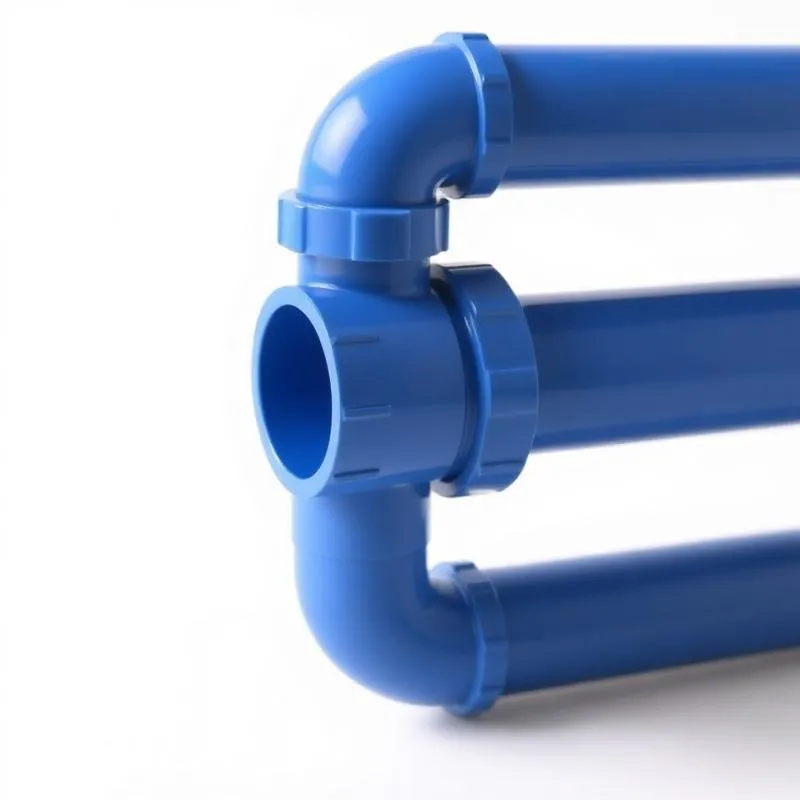
Which pipe for which job
Start with the hottest temperature the pipe will see, then look at the duty. Anything below 60 °C in this table is a uPVC job.
| Duty | Pick | Why |
|---|---|---|
| Cold potable water mains | uPVC | Cold service is what rigid PVC pressure pipe is made for. |
| Sewer and drainage | uPVC | Non-pressure flow at ambient temperature, so heat resistance adds cost and no benefit. |
| Cable duct and conduit | uPVC | No hot fluid is involved; stiffness and price decide. |
| Irrigation | uPVC | Cold water at ambient temperature. |
| Hot water above 60 °C | CPVC | uPVC is not rated above 60 °C; CPVC is rated to about 93 °C. |
| Hot chemical process lines | CPVC, after a chemical check | Holds up better against hot oxidising acids, but each chemical still needs checking. |
| Fire sprinkler lines | CPVC, in products approved for the purpose | Supplier guidance names sprinkler systems as a CPVC use, built to NFPA 13. |
CPVC vs uPVC vs PVC Pipes: What PVC, uPVC and CPVC mean
PVC is the base polymer. Pipe for water, sewer and duct is rigid PVC with no plasticiser added, written uPVC or PVC-U. Plasticised PVC is the flexible grade used where a pipe has to bend. So when a specification says “CPVC vs PVC” for pipe, it almost always means CPVC against uPVC. Our guide to uPVC vs PVC covers the naming, and what is uPVC pipe covers the material.
CPVC is PVC that has been chlorinated further. Chlorine content rises from about 57% in PVC to 63 to 69% in CPVC, which is what lets it keep its strength at higher temperatures. ISO standards write it as PVC-C.
Temperature is the real difference
uPVC has a maximum continuous service temperature of 60 °C. CPVC is rated to about 93 °C. Both are rated at full pressure at 23 °C, and the gap opens as the water warms, because pressure rating falls with temperature in every thermoplastic pipe. The table shows the factor you multiply the 23 °C pressure rating by.
| Water temperature | uPVC factor | CPVC factor |
|---|---|---|
| 23 °C (73 °F) | 1.00 | 1.00 |
| 38 °C (100 °F) | 0.62 | 0.82 to 1.00 |
| 49 °C (120 °F) | 0.40 | 0.65 to 0.80 |
| 60 °C (140 °F) | 0.22 | 0.50 to 0.63 |
| 93 °C (200 °F) | Not rated | 0.20 to 0.25 |
uPVC factors are the same in both sources used: Engineering ToolBox and Project Materials. The two disagree on CPVC, so the range shows both. Use the factor in the manufacturer’s data sheet for the product you buy.
In practice, a uPVC line carrying 49 °C water can use only about 40% of its cold rating, and at 60 °C about 22%. Design to the temperature the pipe will really see. Pipe run above ground in direct sun, and the water standing in it, can be warmer than the supply, and sunlight degrades both materials unless the pipe is painted, jacketed or UV-stabilised. Temperature derating for uPVC works through the ratings in detail.
Cost, joining and sizes
Supplier guides put CPVC at roughly 1.5 to 2 times the price of equivalent PVC, so it earns its place only where heat requires it. Each material needs its own solvent cement. Where a CPVC line meets a uPVC line, use a threaded or mechanical transition fitting. CPVC is also made in copper tube sizes under ASTM D2846, while PVC pipe comes in nominal pipe sizes only.
Standards to look for on the data sheet
| Material | Standard | What it covers |
|---|---|---|
| uPVC (PVC-U) | ISO 1452 (SASO ISO 1452) | Pressure pipe for water supply |
| PVC | ASTM D1785 | Schedule 40, 80 and 120 pipe |
| CPVC | ASTM F441 | Schedule 40 and 80 pipe |
| CPVC | ASTM D2846 | Hot and cold water distribution systems |
| CPVC (PVC-C) | ISO 15877 | Hot and cold water installations |
If a quotation names no standard, ask for one. For uPVC classes and schedules, see pressure classes and sizes and Schedule 40 vs 80.
Chemicals and limits
Both materials resist dilute mineral acids, caustics and chlorine solutions. CPVC holds up better against hot, concentrated oxidising acids. Neither is recommended for ketones and esters, and both have poor or limited resistance to aromatic and chlorinated solvents. Check each chemical and temperature in the chemical resistance guide before ordering.
What 4B Factory supplies
Four Brothers Industrial Co. makes uPVC (PVC-U) pipe at its Al-Kharj plant: watermain pressure pipe, sewer pipe, duct and conduit, and ASTM Schedule 40 and 80 pipe. We also make CPVC pipe, so a project with a hot water line above 60 °C and cold, sewer and duct runs can be quoted from one supplier. Ask us for the CPVC sizes and applicable standard when you request a quote. Our guide to types of PVC pipes shows how the full range fits together. For PPR, copper, GI and PEX, see uPVC vs PPR, copper and GI pipes.
Mixed hot and cold lines on one project?
Send the specification or bill of quantities and mark which runs are hot and which are cold. We confirm the pipe type, class and sizes for each run and quote factory-direct from our Al-Kharj plant.
Request a QuoteFrequently Asked Questions
Yes, but not with a solvent-welded joint. Each material needs its own solvent cement, and PVC cement does not bond CPVC. Use a threaded or mechanical transition fitting where the two meet. Our installation and jointing guide covers solvent-weld practice for uPVC.
Yes. PVC-C is the notation ISO standards use for chlorinated PVC, and CPVC is the common trade name. The standard for hot and cold water installations, ISO 15877, uses PVC-C in its title.
Only slightly at room temperature. One supplier guide lists tensile strength of 55 to 62 MPa for CPVC against 48 to 55 MPa for PVC, and both carry similar pressure ratings at 23 °C. The real advantage shows up as the water heats, because CPVC keeps more of its rating.
No. Supplier guidance excludes compressed air, fuel gas and steam for both PVC and CPVC. Use a pipe material rated for those services.
Yes. 4B Factory makes CPVC as well as uPVC (PVC-U). Ask for the CPVC sizes, pressure ratings and applicable standard when you request a quote. See the full product range.